
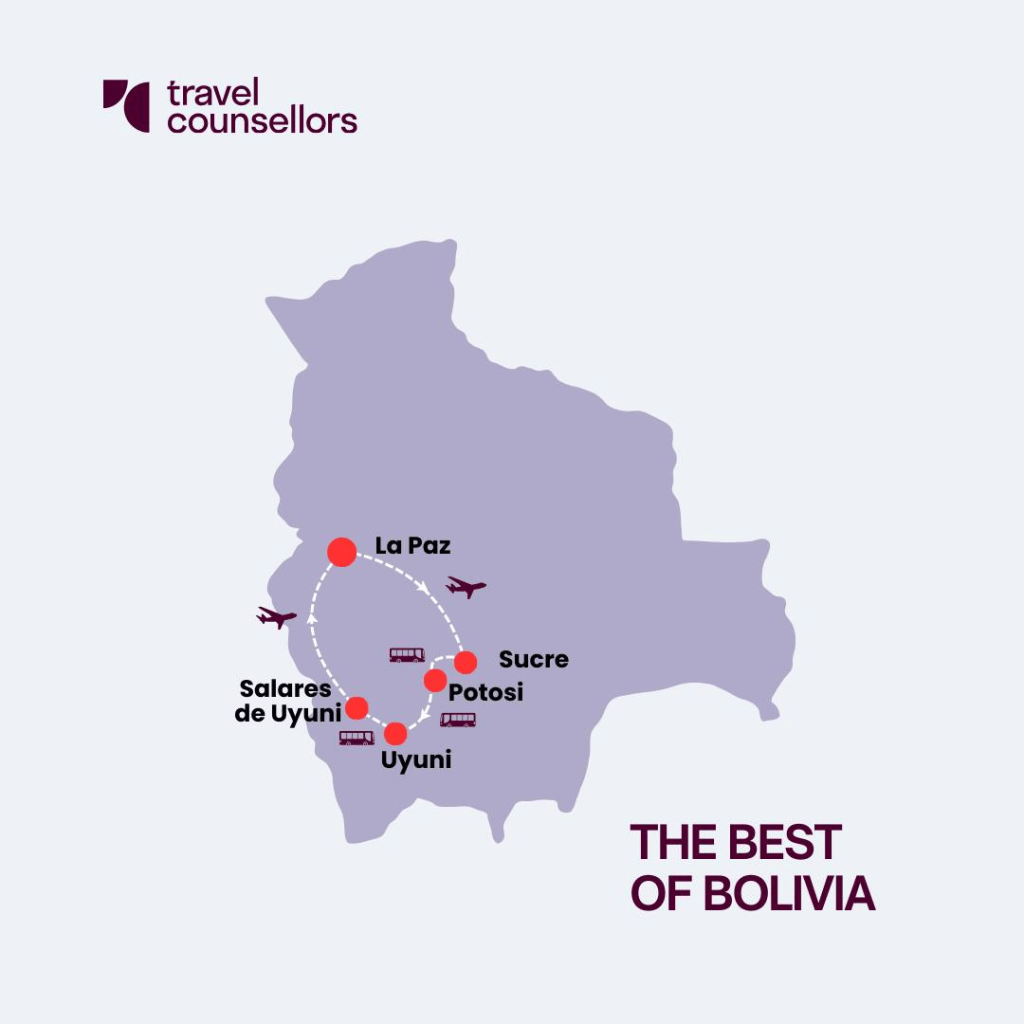
Bolivia’s de facto capital is a thrilling combination of ancient cultures, urban chaos, wild nightlife, stunning scenery, and fascinating history. Situated in a canyon whose striking backdrop of snow-capped peaks contrasts sharply with the metal-roofed abodes that scale in a ramshackle fashion up the valley slopes’ steep inclines La Paz is a wonder of sights and sounds.
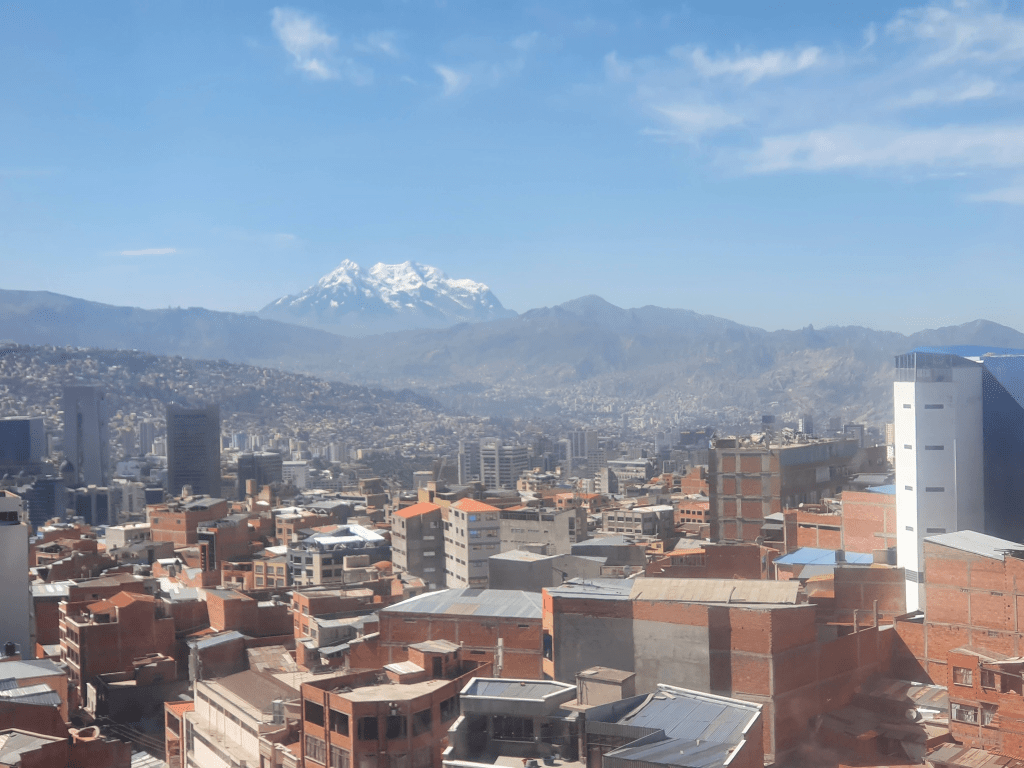
La Paz is famous for its indigenous Aymara culture and the native language Quechua, both of which are a source of immense pride for Bolivia and celebrated here more than perhaps any other nation in South America. The Bolivian High Plain or Altiplano surrounds la Paz. A visit to the city can make for a challenging experience, given the adjustment necessary to be comfortable with the altitude. The three snow-capped peaks of the Illimani mountain dominate the horizon at every turn, and the city winds up and down over the hills that characterize it. There is what feels like a profound lack of order in La Paz, with shoe-shiners, street vendors, food stalls, and market kiosks bustling against illogical traffic jams and curious retail outlets. As chaotic as it may be, there is a certain charm to La Paz’s frenzy, which is undoubtedly in a league of its own.
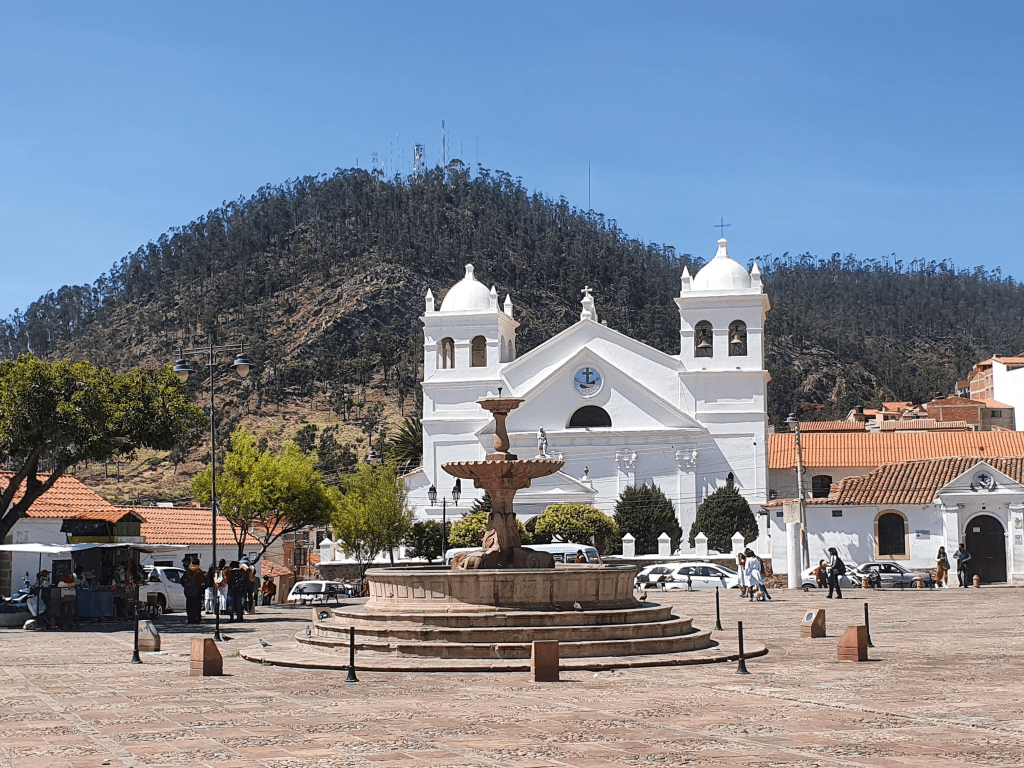
“The White City,” Sucre, is renowned for its stunning colonial architecture, university, and numerous cultural institutions.

Bolivia’s constitutional capital, Sucre, is undeniably captivating. Situated at 2,800m above sea level, it ranks as Bolivia’s sixth most populous city. Founded in 1538 as the City of Silver, Sucre thrived as a hub for Bolivia’s affluent classes engaged in the silver trade. Spanish colonists favored its temperate climate, resulting in a meticulously planned city grid influenced by Andalusian culture. This layout is mirrored in the city’s whitewashed buildings dating back to the Spanish colonial era. Unlike La Paz, where religious practices blend paganism, Catholicism, and indigenous beliefs, Sucre remains the stronghold of Bolivia’s Catholic church. The well-preserved city center exudes colonial charm, boasting red-tiled roofs, baroque churches, and leafy plazas that captivate visitors swiftly. Sucre also serves as a convenient gateway to Uyuni, ideal for those keen on exploring the salt flats further.
In ancient times, the region of Potosí was inhabited by smaller Quechua and Aymara groups known for their craftsmanship in pottery and silverwork. They established a labor system called the “mita” to exploit the valuable minerals in the mountains, particularly the silver mines of Porco, which made them prosperous. When the Spanish arrived and destroyed the Incan Empire, they seized control of the mines, making Potosí one of the wealthiest cities in the world during the 16th century. However, by the mid-18th century, the silver mining industry declined, exacerbated by wars for independence. Potosí suffered greatly during this period, with its population dwindling and its riches looted. Despite its economic challenges, Potosí remains culturally rich, with UNESCO recognizing it as a Cultural Heritage of Humanity. Visitors can explore its colonial architecture, temples, museums, and even venture into some of the historic mining tunnels with a guide.
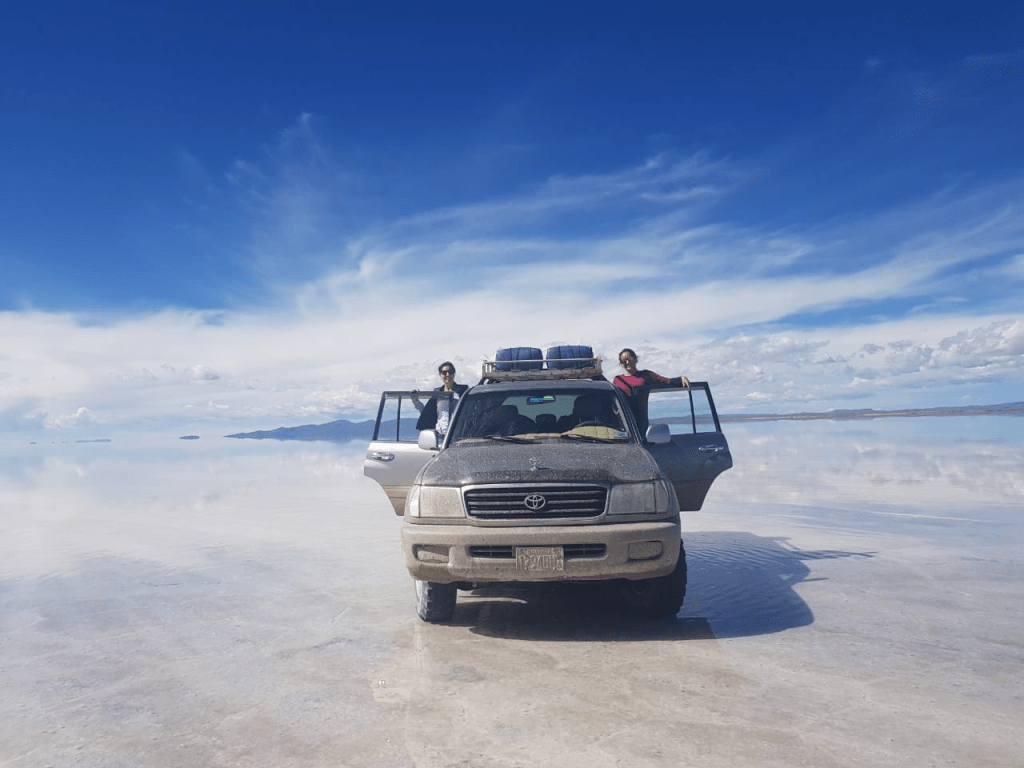
Uyuni, a remote town in the heart of nowhere, once thrived as a railroad junction but now owes its prosperity primarily to tourism. What was once merely a nondescript stopover between Salta, Argentina, and La Paz or Potosí has become an essential destination on this route, thanks to the awe-inspiring salt flats—the largest in the world.
The weather during trips here is cold, windy, and characterized by intense solar radiation. Despite this, the days are typically sunny and warm. Situated southwest of Bolivia at over 3,600 meters above sea level, spanning an expansive 10,582 square kilometers, lies the renowned Salar de Uyuni—the brightest spot visible from space. This vast expanse, resembling another planet, is the largest white desert globally, seemingly stretching endlessly until it merges with the sky.
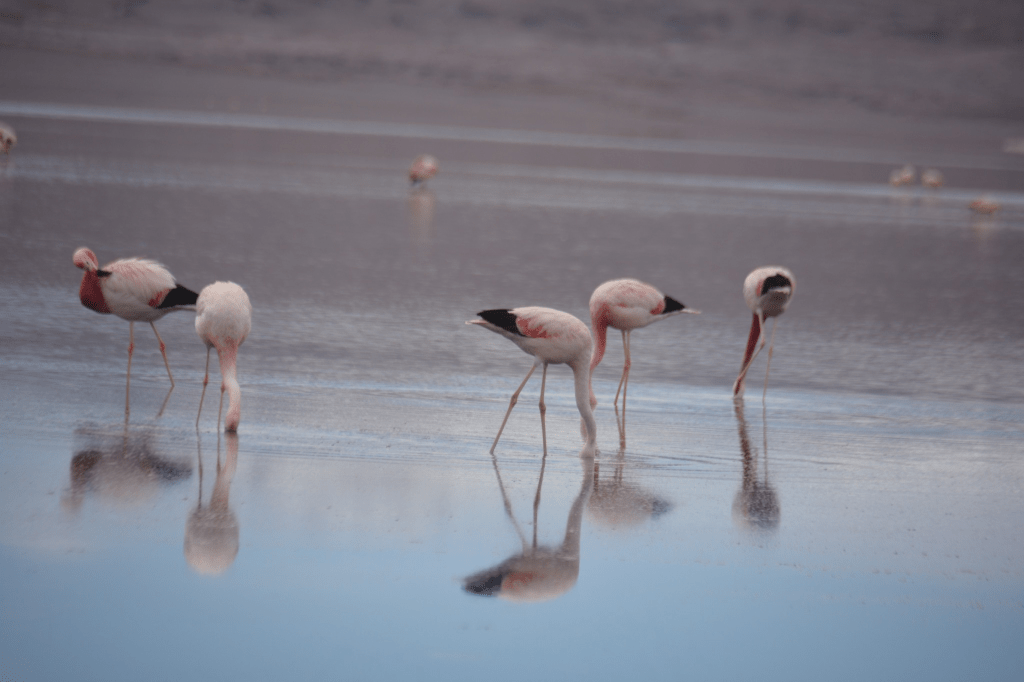
The region is home to natural wonders such as captivating colored lagoons, exotic rock formations, and diverse wildlife thriving in their pristine habitats. Volcanic craters and fumaroles, emitting jets of gas and superheated steam reaching heights of up to 100 meters, add to the area’s allure.
The semi-deserted landscape, coupled with the surrounding volcanic mountains, showcases extraordinary natural beauty. Notably, near the salt flats, the Red, Green, Yellow, and Blue Lagoons—named after their distinct hues—captivate visitors. Glaciers, varied rock formations, and volcanic craters, reminiscent of the Mesozoic era, dot the landscape. Throughout the area, glimpses of diverse towns with rich cultural traditions and customs further enhance the experience.
Like what you read? Get in touch and let me plan the Bolivian adventure of your dreams today.
 Rebecca Mottram Travel Agent
Leave a comment